

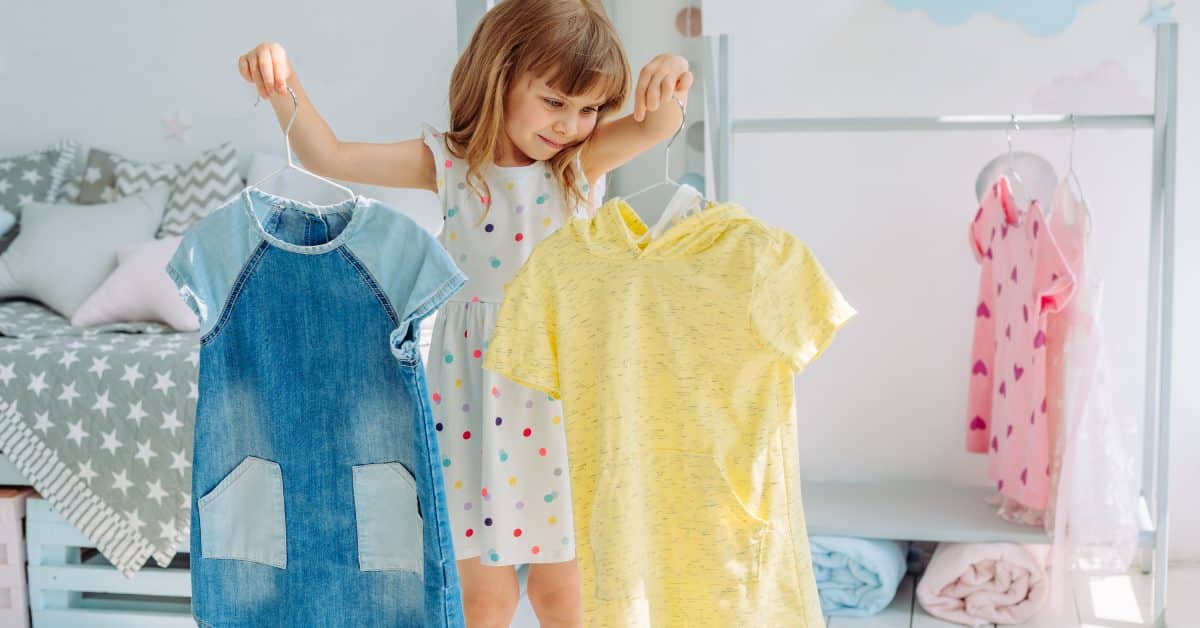
Lately, your child has been eager for independence! One thing they’ve been insisting on doing on their own is picking their clothes for the day. There’s just one issue. The outfits they’ve been putting together have been “bold,” to say the least. You’d like to teach them how to create outfits with a bit more coordination, but how do you explain matching to a kid who thinks every favorite piece belongs together? With these tips, you’ll have your child picking better-matched outfits in no time!
Let Their Favorite Piece Go First
If your child already has one piece in a death grip, start there. There’s no need to argue with a kid who has spiritually committed to a shirt before breakfast. Let that piece lead, then help them choose something simple to go with it.
Keep The Colors Easy to Understand
Color matching can get confusing when every favorite piece feels equally important to your child. A kid sees a shirt they love and pants they love, then decides they must be perfect together. The logic is adorable. The outfit can be a lot.
Try asking, “Do these colors look nice next to each other, or are they fighting for attention?” This teaches your child to look at the whole outfit instead of judging each piece by itself.
Stick To One Theme
Teaching your child to stick to a theme can help make outfit choices easier to understand. For example, they should pair western jeans with a western shirt, like a pearl snap shirt. A playful graphic tee should go with a casual pair of pants. Themes are easier for a child to understand compared to vague style words. They help them see why two favorite pieces can still clash. One piece may belong with a dressier outfit, while another belongs with everyday play clothes.
Match The Outfit to the Day
Kids understand matching better when you connect the outfit to the plans ahead. For school, you can say, “Pick something you can sit in, play in, and keep on all day without fussing with it.” For a birthday dinner, you can say, “Let’s choose something that looks a little neater than play clothes.” This teaches your child to ask about each outfit, “Does this make sense for where I’m going?”
Fix One Piece at a Time
When an outfit goes sideways, resist the urge to rebuild the whole thing from scratch. Your child worked hard on that wild little masterpiece. Changing everything can make them shut down or dig in harder.
A one-piece swap teaches more without the drama. If the shirt is the loudest part, keep it and soften the pants. If the pants are the problem, let the shirt stay. Small fixes help kids see what changed and why it helped.
Give Them Room to Figure It Out
Some mornings, the outfit still won’t quite land. That’s part of raising a child with opinions and a closet full of possibilities. Praise the choices that work, guide the ones that need help, and let them practice without turning every outfit into a big correction.
Before long, teaching little ones how to create matching outfits becomes less of a daily debate. Your child starts spotting what belongs together, and you get fewer “fashion surprise” mornings before you’ve had coffee.